
The most powerful technology in healthcare doesn't replace scientific judgement. It helps scientists see further, sooner.
Why healthcare, not Big Tech
After three decades at the intersection of technology and medicine, I have come to believe that much of the distance between a scientific idea and the patient who benefits from it is a technology problem. Closing that distance has defined my career.
My career began in India, where I contributed to the development of modules for a radiation oncology treatment planning system. The challenge was profound: to model how high-dose radiation interacts with a tumour and the healthy tissue around it, helping clinicians maximise benefit while minimising harm before treatment began. It taught me early that in healthcare, engineering decisions carry human consequences. That accountability is why I chose this industry, and why I have stayed.
At Roche, I led the creation of our global imaging data platform, transforming vast volumes of clinical trial imaging into AI-ready data. That foundation allows algorithms to identify subtle signals that are difficult to detect visually, giving scientists earlier and more precise insights into how a medicine is performing.
Today, as Head of Product for Trial Simulation & Protocol Design, I apply the same principle at greater scale: enabling scientists to anticipate the consequences of their decisions rather than discover them after the fact.
The tech: where science meets simulation
A clinical trial protocol is a system of hundreds of interdependent decisions, each with implications for patient burden, cost and timelines. My team develops generative AI (GenAI) and agentic capabilities that help scientists design, stress-test and simulate those decisions: standards-based study definitions, end-to-end traceability from objectives to assessments, and simulations that evaluate a trial design before the first patient enrols.
The defining challenge is trust. In a regulated environment, AI must strengthen scientific judgement, not substitute for it. That's why we build explainability, quality and human oversight into every capability from the outset.
At Roche, patients are our core focus. Our contribution as technologists is to put the right insight in front of scientists earlier, so decisions are grounded in evidence, trials are designed with patients in mind, and better medicines reach people sooner. We rarely meet the patients who benefit from our work, but every simpler, smarter protocol makes a trial easier to join and faster to complete. That is the real impact we strive to make.
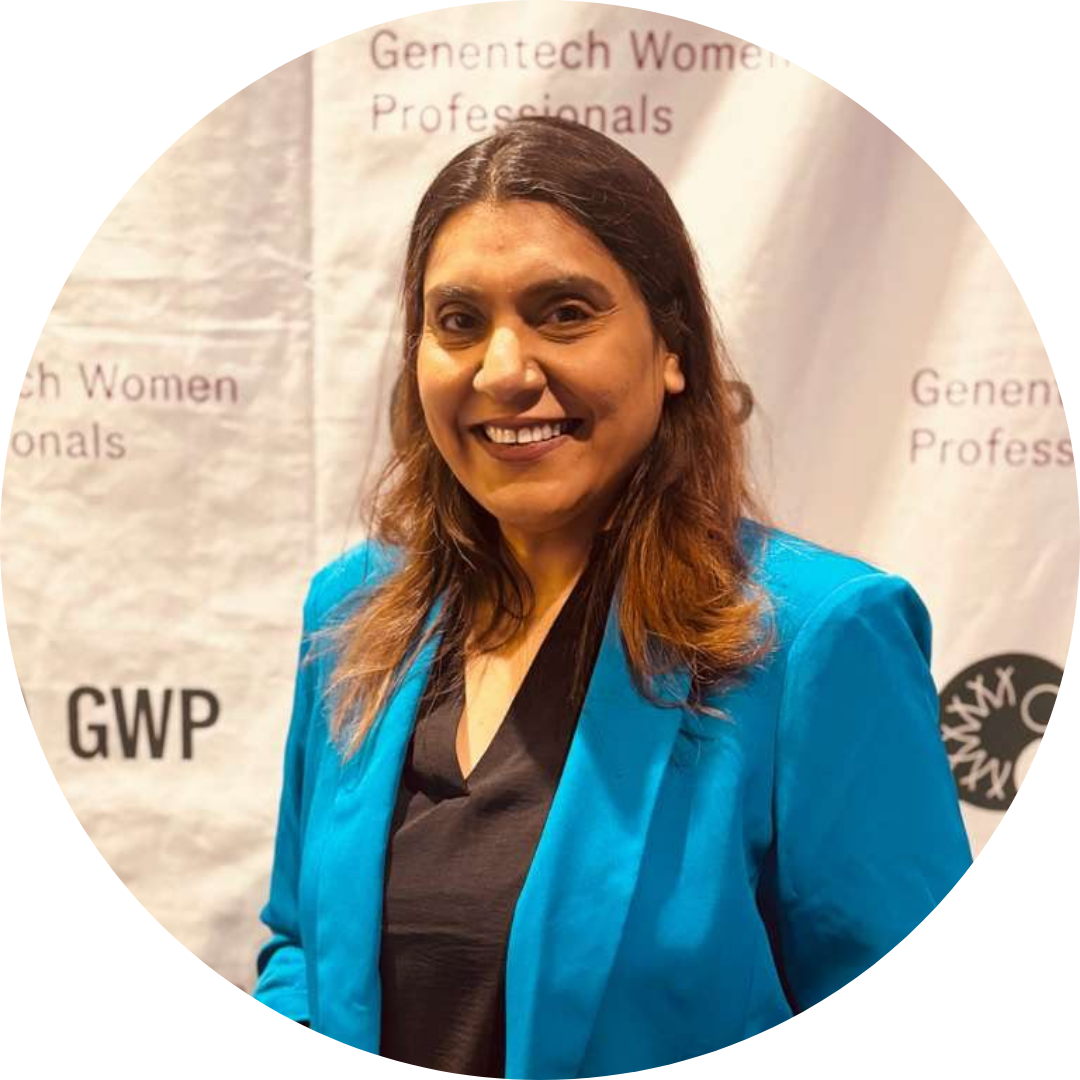
“My career began by modelling how radiation affects tumours and surrounding healthy tissue. Today, my team brings that same evidence-led thinking to clinical trials, where we leverage technology and AI to help scientists make smarter design decisions from the outset. The result? Optimised trials that reduce the burden on patients, investigators and sites.”
Shagun Grover
Head of Product Trial Simulation & Protocol Design
slide 1 of 2 I've learned that people will forget what you said, people will forget what you did, but people will never forget how you made them feel. Maya Angelou
Why Hyderabad, why now
Bringing these capabilities to life takes more than technology alone. It takes people who can bring together AI, data, product thinking and scientific understanding to solve complex problems.
Our Hyderabad Tech Hub will play an important role in shaping the technology that supports Roche globally. Having started my own career in India, I know the calibre of talent here and the potential to bring that expertise to challenges that can make a difference to patients worldwide. I am confident that this team will help address some of healthcare's most consequential problems.
seperator